
How Reaganomics Brought Back the Gilded Age
For half a century, America built the broadest middle class in history. Then came Reaganomics. Forty-five years later, the results are in.

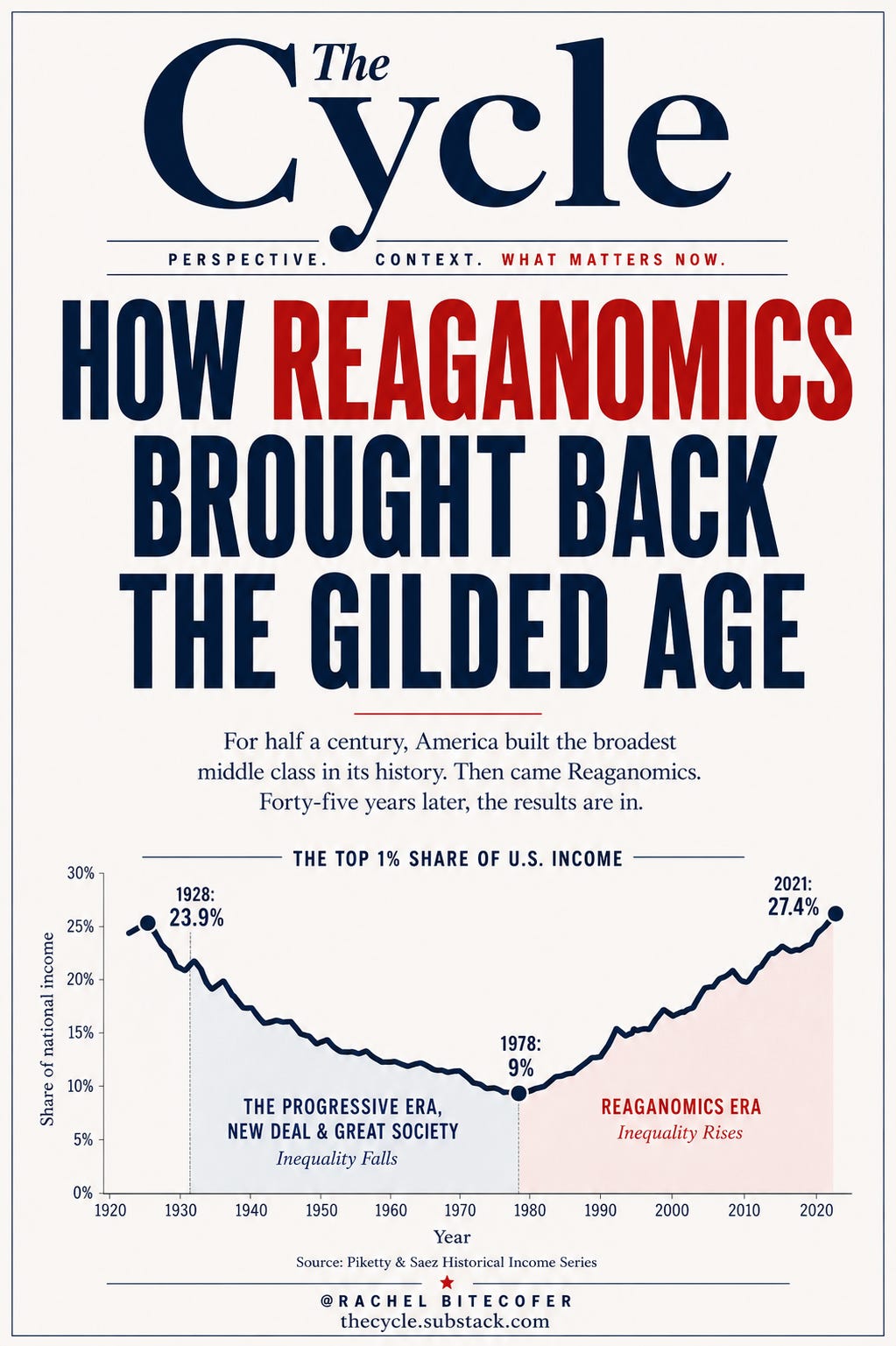
In 1928, on the eve of the Great Depression, the richest 1 percent of Americans collected 23.9 percent of all income in the United States.
Over the next fifty years, that share would be cut by more than half. Through progressive era trust-busting, labor reform, taxation, social insurance, and public investment, Americans built the broadest middle class in the nation’s history. By the late 1970s, the top 1 percent claimed just 9 percent of national income.
Today, that share has climbed above its 1928 level.
That fact alone should force us to rethink much of what we’ve been told about the American economy. Because if the richest 1 percent now capture a larger share of national income than they did on the eve of the Great Depression and we have just created the world’s 1st trillionaire, then the obvious question is not whether Americans are unhappy with the economy. The obvious question is how we got here.
To answer that question, we have to understand what the first Gilded Age actually was.
For many Americans, the phrase evokes images of grand mansions, railroad tycoons, and industrial fortunes. For ordinary people, it looked very different. It looked like children working twelve-hour shifts in textile mills and coal mines. It looked like six-day work weeks that routinely stretched to sixty or seventy hours. The five-day work week did not exist. Overtime protections did not exist. Workplace safety protections were minimal or nonexistent.
The conditions for the bottom 50% of Americans were often brutal.
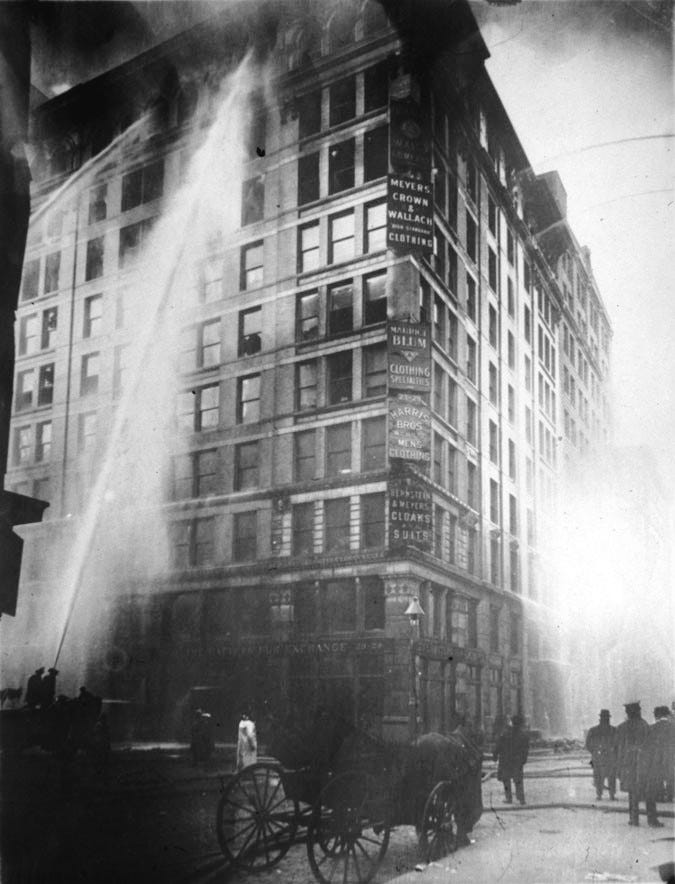
In 1911, 146 garment workers—most of them young immigrant women and girls—died in the Triangle Shirtwaist Factory fire in New York City. Some burned alive. Others jumped from upper-story windows to escape the flames. The factory owners had locked the exits.
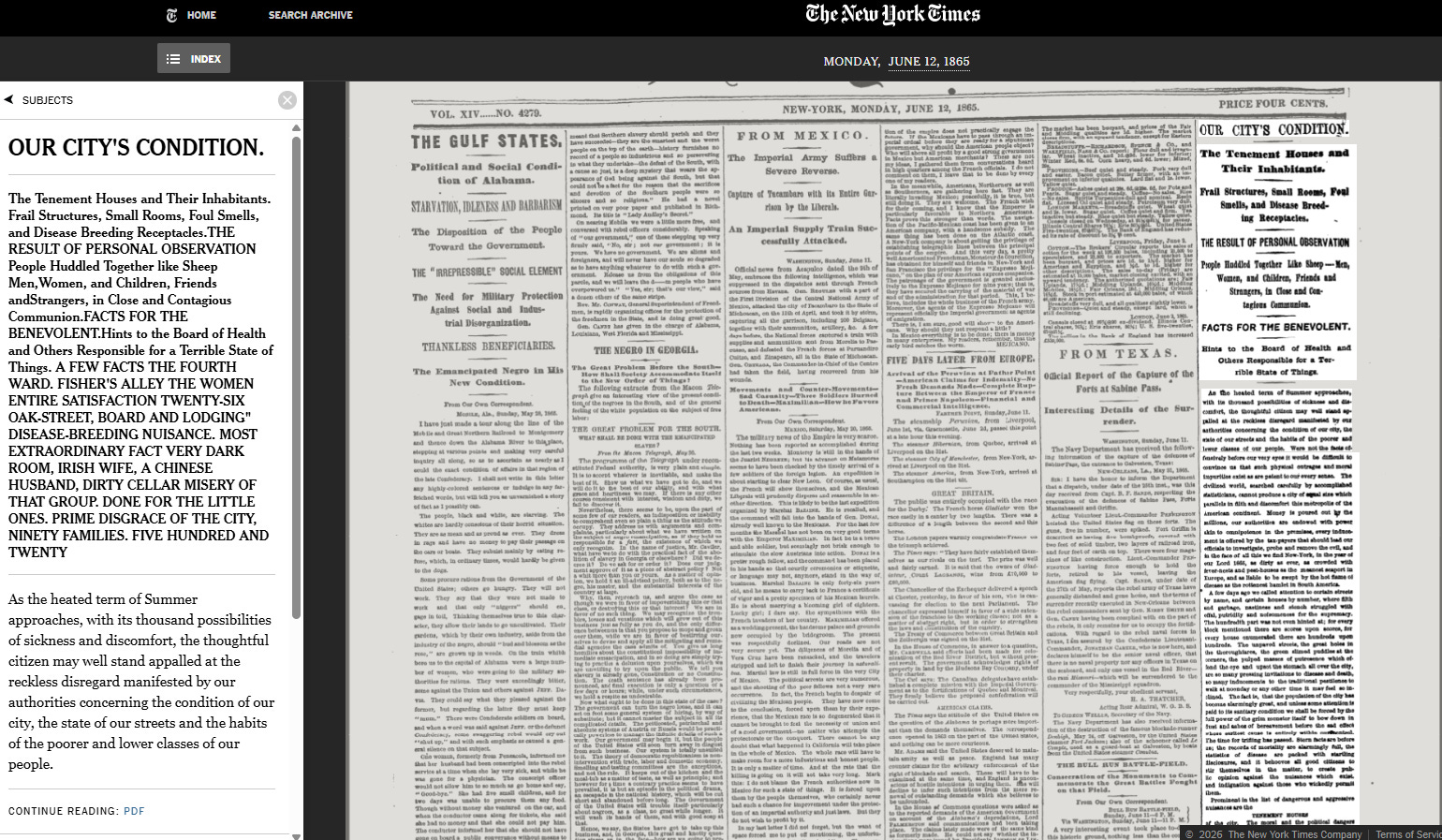
Then swerving on the New York Board of of Health in the 1980s, a future president Teddy Roosevelt (at that time there were liberal Republicans!) toured tenements in NYC and was horrified to see that people were living in one room apartments where entire families from small children to the elderly staved off starving by rolling cigars.
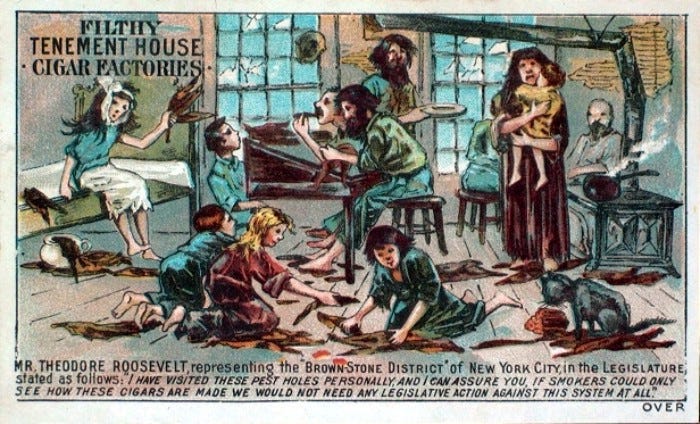
That was not an accident. That was the system.
Workers routinely lost fingers, arms, eyesight, and their lives in factories, rail yards, mines, and steel mills. If you were injured, that was your problem. If you could no longer work, that was your problem too. Children were bred to work, not to be educated.
There was no Social Security. No Medicare. No disability insurance. No unemployment insurance. Old age was often a financial catastrophe that left you dying in your own filth on the streets. Millions of Americans worked until their bodies gave out and if they were lucky, they had a family to keep them alive.
When the economy collapsed, families collapsed with it.
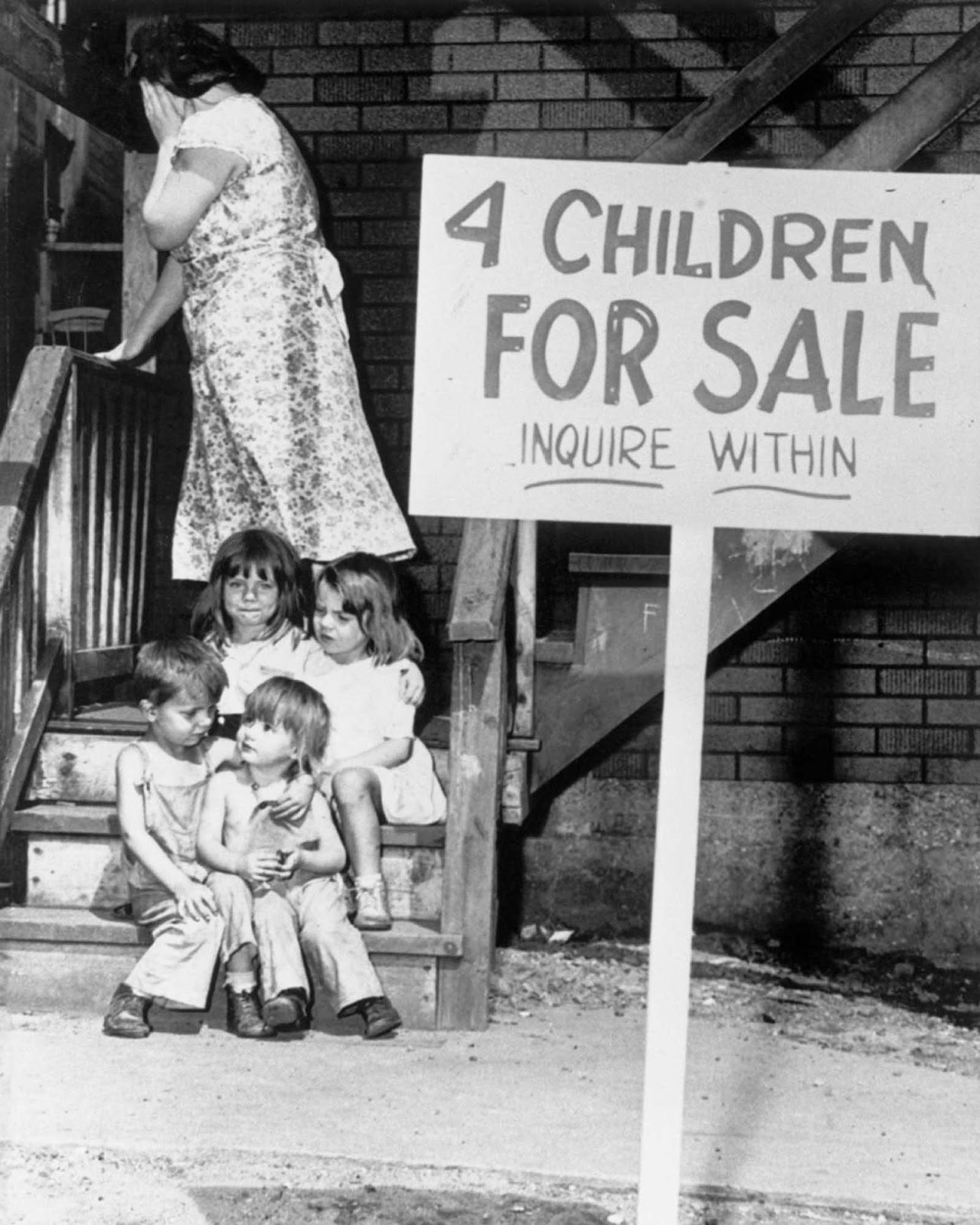
At the height of the Great Depression, unemployment reached roughly 25 percent. Families lost their homes, exhausted their savings, and relied on bread lines to survive. Some parents placed children with relatives, orphanages, or charitable organizations because they could no longer feed them. Some simply sent 10 year old children out into the world to fend for themselves.
The dangers did not stop at the factory gate.
In many American cities, contaminated water spread diseases such as typhoid and cholera. Scientists increasingly understood how those diseases spread, but landlords, property owners, and business interests resisted sanitation requirements, sewer construction, plumbing upgrades, and housing regulations because they did not want to bear the cost. They claimed the science as a hoax- the more things change the more they stay the same.
A century later, tobacco companies would use the same playbook to deny the connection between smoking and cancer. Fossil fuel interests would use it again to deny climate science. In each case, ordinary people paid the price while powerful interests fought regulation.
The wealth created by industrialization was real. It built fortunes that transformed the American economy and created some of the richest men the world had ever seen. The defining feature of the Gilded Age was not poverty itself. Poverty has always existed. The defining feature was the extraordinary costs of unregulated industrialization and capitalism on the poor at a time where similarly despondent people across the world were turning to fascism and communism in desperation.
Beginning in the Progressive Era and continuing through the New Deal and Great Society, progressive reformers challenged monopolies, fought political corruption, demanded workplace protections, built clean water systems, enacted food safety laws, strengthened labor rights, and created a fairer tax system. Theodore Roosevelt took on powerful trusts. Franklin Roosevelt built the New Deal. Lyndon Johnson expanded Medicare, Medicaid, civil rights protections, and anti-poverty programs.
This was not socialism as Republicans claim. It was a fifty-year effort to make capitalism work for ordinary people, and it worked. For a long time, it worked quite well. The results transformed American life. Children who once worked in factories went to school instead. Workers who once faced constant danger gained workplace protections and legal rights. Food and water became safer. Diseases that once terrorized cities largely disappeared. Americans lived longer, healthier lives. Millions of elderly Americans who would once have faced destitution entered retirement protected by Social Security and, later, Medicare.
For the first time in the nation’s history, a broad middle class became the defining feature of American life. A factory worker could buy a home. A single income could support a family. Children could reasonably expect to live better than their parents. The American Dream became more than a slogan. For millions of families, it became reality.
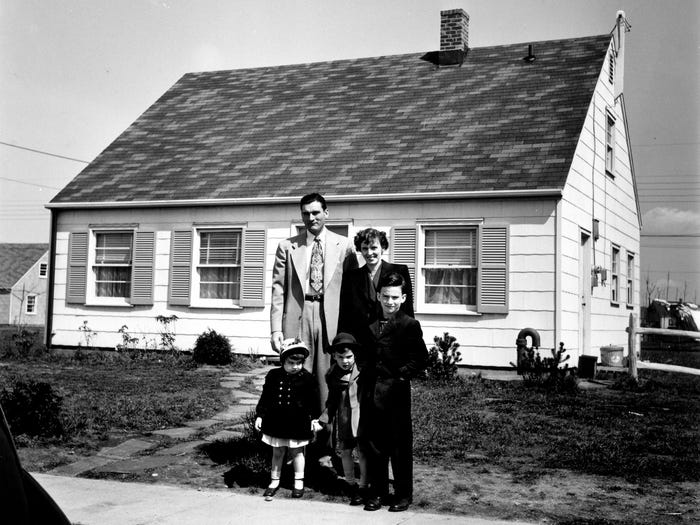
The data reflected what people could see with their own eyes. Income inequality fell dramatically. The top 1 percent’s share of national income dropped from nearly 24 percent in 1928 to roughly 9 percent by the late 1970s. Homeownership expanded. Poverty among seniors collapsed. Economic growth was broadly shared. The United States built the largest and most prosperous middle class the world had ever seen.
Then came Reaganomics.
By the late 1970s, many Americans had lost faith in the postwar economic consensus. Inflation was high, economic growth had slowed, and the oil shocks of the decade left Americans frustrated and looking for answers. Conservatives believed they had one.
For nearly half a century, the federal government had pursued a broad project of regulating markets, protecting workers, taxing high incomes, investing in public goods, and expanding economic security. Conservatives argued that the very policies that had built postwar prosperity were now holding the economy back. Taxes were too high. Regulations were too burdensome. Labor unions had become too powerful. Government itself had grown too large.
The solution they proposed was not reform. It was reversal.
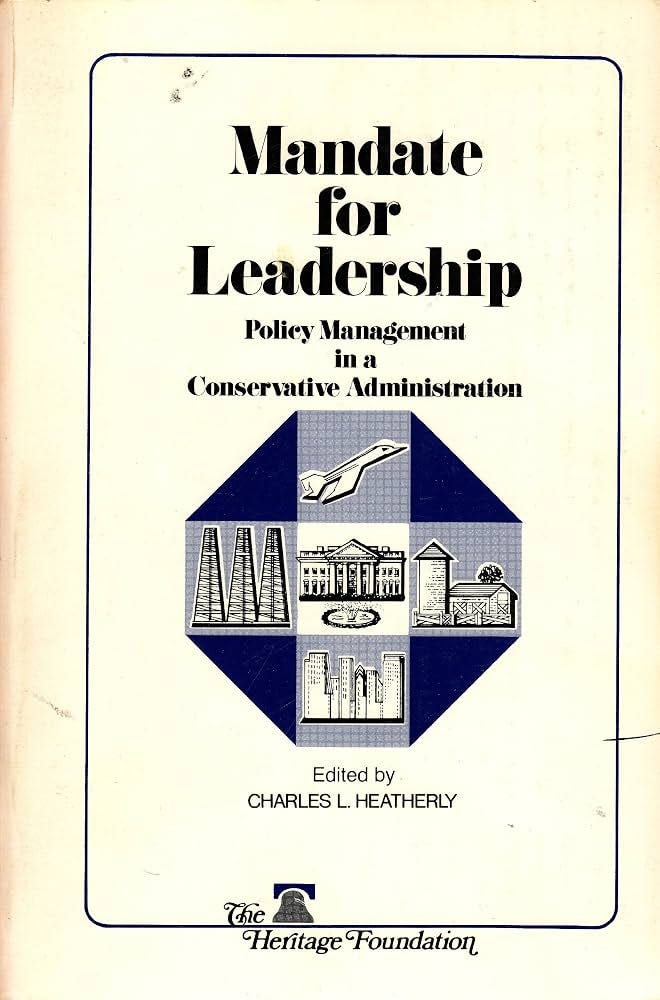
Led by Ronald Reagan and supported by conservative economists, business leaders, and organizations like the Heritage Foundation, a new economic theory emerged. The best way to help ordinary Americans, they argued, was not to direct resources toward ordinary Americans. Instead, government should focus on creating the conditions for investment and growth by reducing taxes on high earners, rolling back regulations, weakening organized labor, liberalizing financial markets, and allowing capital to move more freely.
Today, that argument sounds familiar because we have spent forty-five years living inside it. In 1980, it sounded radical. Imagine telling a factory worker in 1965 that the best way to improve his standard of living was to cut taxes on millionaires. Imagine telling a union worker that reducing labor’s bargaining power would eventually make workers better off. Imagine telling Americans who had lived through the Great Depression that the lessons of the New Deal had been misunderstood all along.
That was the promise of Reaganomics.
The theory was straightforward. If taxes on wealthy individuals and corporations were reduced, they would invest more. If regulations were relaxed, businesses would expand more quickly. If financial markets were freed from government constraints, capital would flow to its most productive uses. Economic growth would accelerate and the benefits would eventually spread throughout society.
George H.W. Bush famously called the theory “voodoo economics” during the 1980 Republican primary. He was not a liberal criticizing conservatism from the outside. He was a Republican criticizing a theory that many Republicans at the time considered implausible.
But Reagan won, and the experiment began.
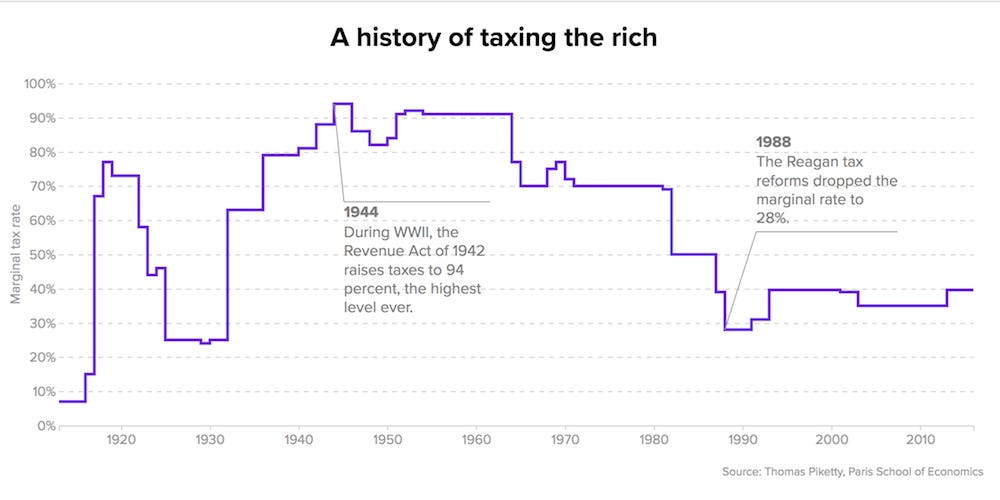
The shift was dramatic. In the decades after World War II, top marginal tax rates had often exceeded 70 percent and, at times, surpassed 90 percent. Organized labor represented a substantial share of the workforce. Financial institutions operated under rules designed in response to the excesses that had helped produce the Great Depression. The Reagan revolution sought to dismantle much of that framework and replace it with a new one.
For the next four decades, conservative policymakers repeatedly cut taxes, weakened labor protections, deregulated industries, embraced free trade, and advanced the idea that what benefited investors and shareholders would ultimately benefit everyone else.
Forty-five years later, the results are impossible to ignore.
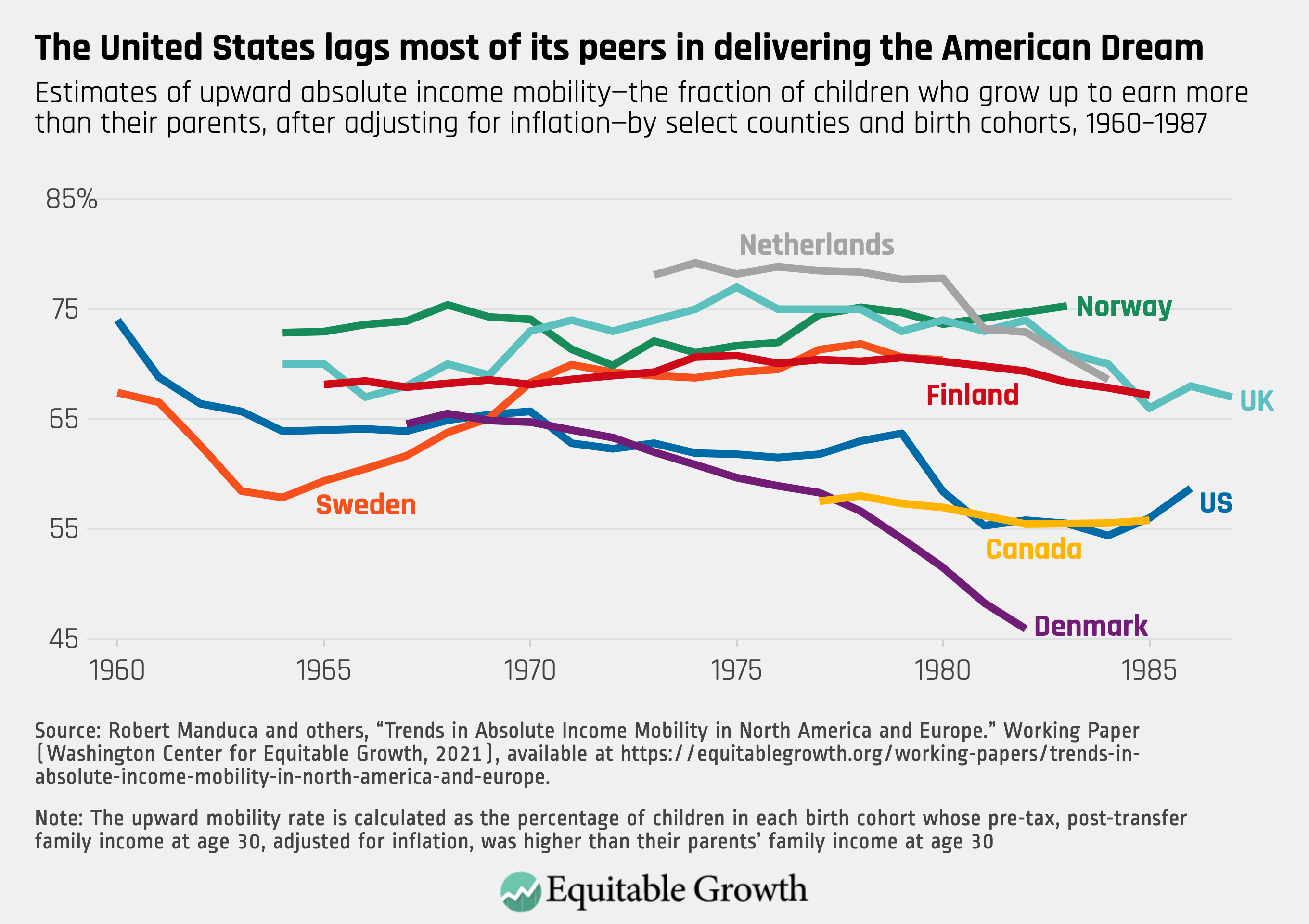
The top 1 percent’s share of national income has risen from roughly 9 percent in the late 1970s to levels exceeding those of 1928. Wealth has become increasingly concentrated at the top. Union membership has collapsed. Manufacturing communities across the country have been hollowed out. Housing, higher education, and health care have become dramatically less affordable, while economic insecurity has increased for millions of working- and middle-class Americans.
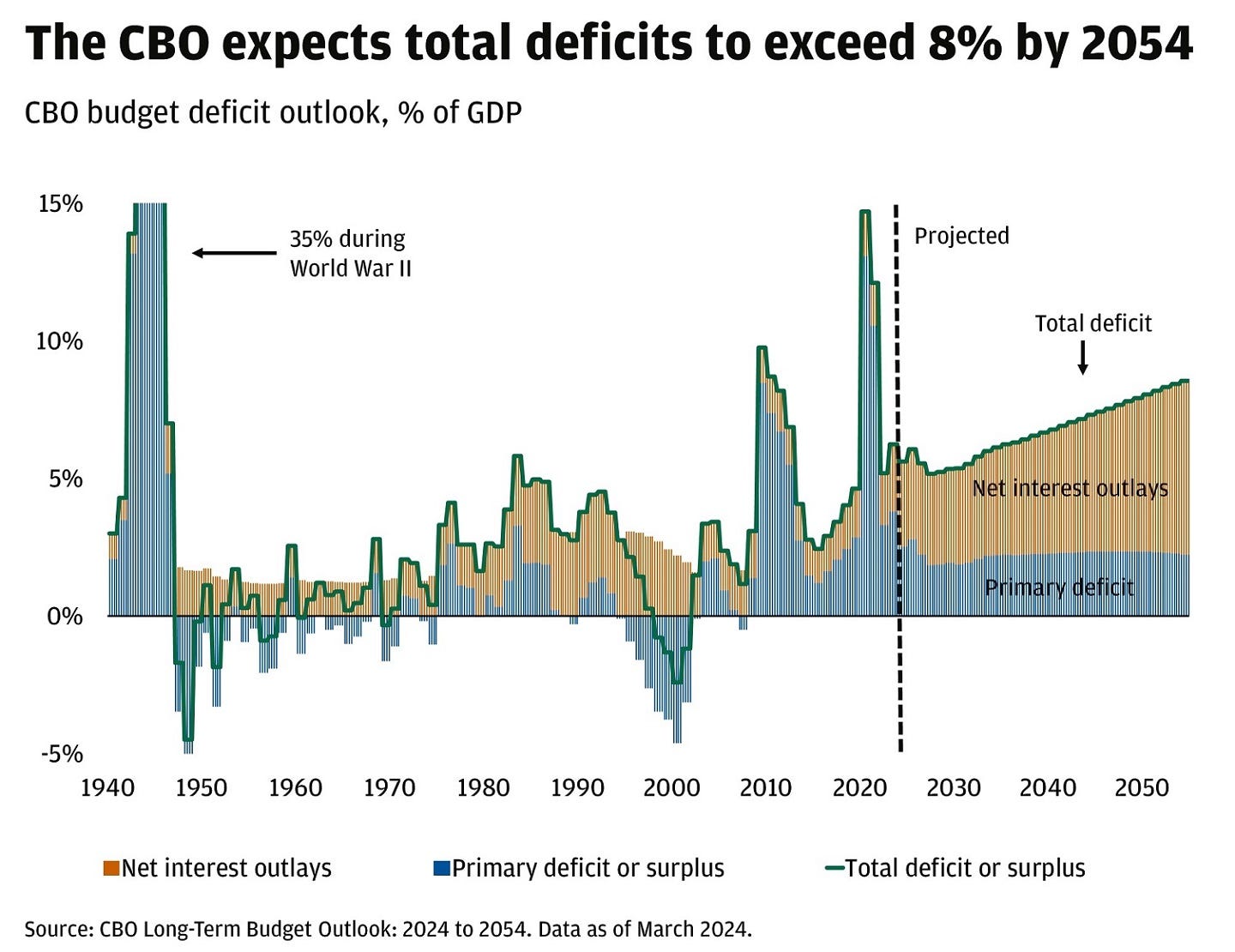
Not to mention debt and deficits. By slashing top tax rates by more than 30%, Reagan’s Voodoo economics immediately created our modern day debt and deficit issues. The government has grown only modestly since the post-war heydays, we don’t have a spending problem, we have a revenue problem from the Republican Party’s transfer of wealth to the billionaire class.
To be fair, Reaganomics did produce benefits. Global supply chains lowered the cost of televisions, electronics, clothing, and countless household products, giving Americans access to an abundance of inexpensive consumer goods unimaginable to previous generations. Wall Mart does not exist without Reaganomics. Unfortunately though, our cheap goods have come at a price, our jobs.
For decades, Americans have been told that these outcomes were inevitable. Globalization. Technology. Market forces. Change. But economies are not weather. They are the product of policy choices and western Europe’s version of capitalism is clearly better than America’s Wild West version. The first Gilded Age was not an accident, it was a reflective of the limits of laisse faire capitalism, which is why Europe now has regulated capitalism.
Americans know something is wrong with the economy. They see it every time they buy groceries or gas, try to buy a home, pay for college, or cover a medical bill after already paying a $5,000 deductible.
What many people do not understand, including some Democratic Party candidates is that these outcomes were not handed down by some impersonal force of history, they were the result of intentional Republican Party policy choices made by political leaders who promised that a rising tide would lift all boats.
The only boats Republican economics ever raised are yachts.
The experiment of Republican economic policy an abject failure for regular Americans. The question is whether Democrats can make it clear who created this system and what they’re offering to fix it because it sure as hell wasn’t Bill Clinton.
Dear Rachel. The facts - and truth - can be ugly.
A few indelible memories about the Reagan years.
I was unemployed, my company just closing its doors. I was watching Reagan speech on television. He said "Unemployment is not that bad. Look at all the job listings in the newspaper." I became a leftist at that very moment.
In the film "Raising Arizona", the character played by Nicohlas Cage, Hy, said "Everything was going pretty good until that somabitch Reagan got elected......"
Senator Patrick Moynihan, discussing how the national debt and budget deficit exploded under the Reagan administration, stating "the US borrowed $50 billion and threw a party." He didn't mention that a good chunk of the funds was stolen from Social Security and other entitlements.
During the Iran Contra crisis, the administration was up to its eyeballs in illegal activities and coverups. Reagan would probably been impeached if he wasn't at the end of his second term and so out of it mentally, he could not understand the consequences.
So, if the only goodness we received from the Neocon revolution of Reagan was cheaper TVs, cheaper washing machines, and the loss of American jobs overseas, we could have done better without electing "The Great Communicator."
Our second and WORSE Gilded Age. We are ALL being taken advantage of by the Billionaires who are attempting (and so far succeeding) to take over our country and the world. The billionaires are all in Cahoots with Trump because he is doing exactly what they want him to do to take advantage of all of us and take over our lives for their benefit and NOT ours! For more on how we got here and how bad it really is - and it is BAD and getting worse by the day "Invisible Doctrine: The Secret History of Neoliberalism" by George Monbiot and Peter Hutchison (also a documentary) and "Burned By Billionaires: How Concentrated Wealth and Power are Ruining Our Lives and Planet" by Chuck Collins. One solution - We MUST elect politicians who will take them on and shut them down and make them pay........ (Newsom and Klobuchar and others have to get on board with TAXING THE RICH!)