
Iran’s Other Leverage:
WATER

A couple days ago I wrote about the first lever Iran holds in this war: the Strait of Hormuz. If Iran disrupts shipping through that narrow channel between Iran and Oman, roughly one-fifth of the world’s oil supply gets caught in the crossfire. Oil spikes. Shipping markets panic. The global economy starts sweating. That’s leverage.
But Hormuz is only half the story. Because there’s another vulnerability sitting right across the Persian Gulf—one that almost nobody outside the region knows about.
The modern cities of the Gulf are built in the middle of a motherfucking desert. Dubai. Abu Dhabi. Doha. Kuwait City. Manama.
Like this kind of desert!!!
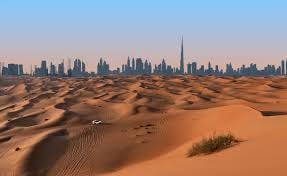
Cities like these couldn’t exist before modern infrastructure. They exist because massive industrial plants along the coast turn seawater, the only water there, into drinking water. Take those machines away, and the system holding these cities together starts to break down frighteningly fast. Which means that in a regional war, those machines become something else entirely: targets.
Infrastructure Warfare
This is why analysts increasingly worry about what’s known as infrastructure warfare in the Gulf. Instead of armies clashing across borders, the battlefield shifts to the systems that allow modern societies to function: oil terminals, shipping lanes, electrical grids, and increasingly desalination plants.
And there are already signs that this kind of escalation may be beginning. Recent reporting indicates that desalination infrastructure has already become part of the conflict narrative, with competing claims about strikes on facilities in the region. Iranian officials accused the United States of striking a desalination plant, while U.S. officials denied targeting water infrastructure.
In the fog of war, attribution can be murky. What matters more than the immediate blame game is the strategic logic. When you step back and ask who actually benefits from threatening desalination infrastructure, the answer becomes clearer.
Iran cannot match the United States and Israel in conventional military power. But it doesn’t have to. Iran’s strategy has long relied on exploiting asymmetric vulnerabilities—the fragile systems that modern economies depend on. And in the Gulf, there may be no vulnerability more fragile than water.
A Civilization On Life Support
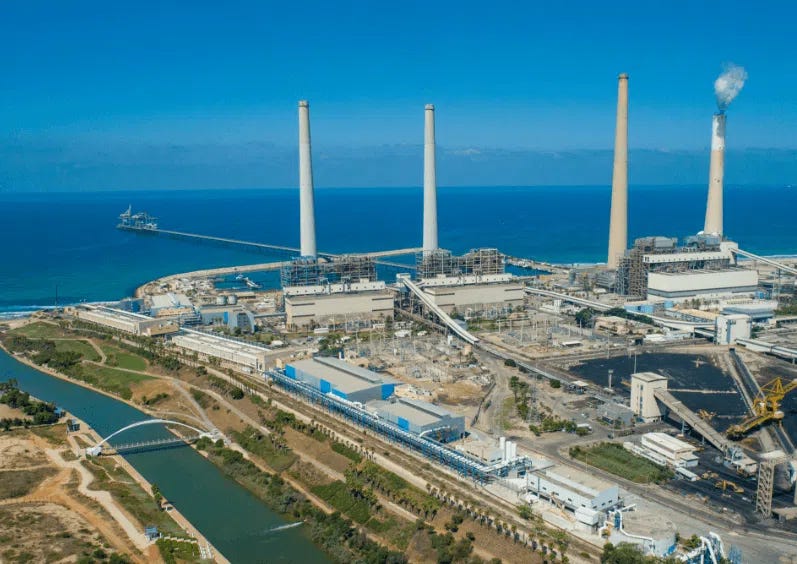
Much of the Arabian Peninsula is one of the driest places on Earth. There are almost no rivers, rainfall is minimal, and groundwater supplies are limited and often depleted. Which means the modern cities of the Gulf exist because of desalination plants—large industrial facilities that remove salt from seawater and pump freshwater into urban water systems.
In some countries, desalination isn’t just important. It’s everything.
Kuwait gets about 90% of its drinking water from desalination. Oman gets roughly 86%. Saudi Arabia gets about 70% of its potable water that way. Bahrain is almost completely dependent on desalination, and other Gulf states rely heavily on it as well.
Entire modern states in the Persian Gulf depend on coastal plants running around the clock to turn seawater into drinking water. In fact, more than 90% of the Gulf’s desalinated water comes from just 56 plants, which is exactly what makes the system so strategically vulnerable.
Take those plants offline and the consequences move fast. Water pressure drops, rationing begins, and hospitals and sanitation systems start feeling the strain. It doesn’t take much imagination to see the problem: a city sitting in the middle of a desert with no natural freshwater source nearby could begin facing a serious crisis within days if desalination systems were disrupted.
A civilization built on desert sand is being sustained by industrial machinery.
Iran’s Strategic Perspective
From Iran’s point of view, the strategic map of the region looks very different. The United States and its partners surround Iran with military bases across the Gulf—Bahrain, Qatar, Kuwait, the UAE, and Saudi Arabia all host American forces or facilities. To Iranian planners, that looks like a military containment ring.
But those same Gulf states also have a glaring structural weakness: they cannot survive without desalinated water. Iran, by contrast, is geographically huge and far less dependent on desalination. The country still relies far more heavily on rivers, reservoirs, and groundwater basins.
In other words, the vulnerability is not symmetrical. Which is exactly the kind of asymmetry Iran’s military strategy has always tried to exploit.
Iran’s Two Pressure Points
Put all of this together and Iran’s strategic leverage becomes much clearer. Despite being vastly outmatched by the United States and Israel in conventional military power, Iran still sits astride two of the most fragile systems in the modern global economy.
The first is the Strait of Hormuz—the narrow maritime chokepoint through which roughly 20 percent of the world’s oil supply moves every day. The second is water.
The gleaming skylines of the Gulf—Dubai, Doha, Abu Dhabi, Kuwait City, Manama—look like monuments to modern wealth and engineering. But beneath that prosperity lies a simple geographic reality: these cities sit in the middle of a place humans should not be able to exist in.
They exist because a handful of industrial plants along the coastline turn seawater into drinking water. Take those systems offline and the consequences move fast. Water pressure drops, rationing begins, and hospitals and sanitation systems feel the strain. In a matter of days, entire metropolitan areas can find themselves facing a basic survival problem.
This is why analysts increasingly worry that the real battlefield in a Gulf war will not be armies crossing borders. It will be infrastructure: oil terminals, shipping lanes, power grids, and desalination plants.
The modern Gulf economy runs on two invisible lifelines—oil leaving the region and freshwater coming out of the sea. And both of those lifelines run directly past Iran’s coastline.
Which means that even without matching the United States militarily, Iran retains something far more dangerous in a regional conflict: the ability to shake the systems that modern cities depend on to survive.
Because in the modern Gulf, the real battlefield isn’t territory.
It’s the infrastructure that keeps the desert alive.
Dear Rachel. Thank you for your thoughts, for they are always insightful. War. It is more than two rival armies, led by a military hierarchy, sponsored by corporate elites. Two armies smashing themselves until a surrender is a small part of the story. The real cost occurs after the fighting ceases. The dead, wounded, the permanently disabled, either physically or psychologically. Mothers and fathers losing sons and daughters, spouses losing one another, children losing parents. Massive monies spent to rebuild infrastructures permanently destroyed. The loss of future contributors for the benefit of societies. After effects such as buried explosives reaching the surface, Agent Orange, false jubilation to the victors, and scapegoating for the losers. The threat of nuclear annihilation as a last resort or a justification to end the conflict. Mankind as existed as a civilized entity by some estimates for about 20,000 years. During the past 250 years we have discovered a way to cease our existence on Earth. Heaven help us, for we don't understand how to help ourselves.
Water is not quite as asymmetrical an asset as it's made out to be here. Iran is undergoing a massive drought, so much so that according to this article https://e360.yale.edu/features/iran-water-drought-dams-qanats Iran is considering moving Tehran! So a strike on Iranian desalinization plants would have a huge impact. Sadly, both sides have targeted these plants, though so far on a limited scale.