
The Confederacy Lost the War.
It Did Not Lose the Peace.

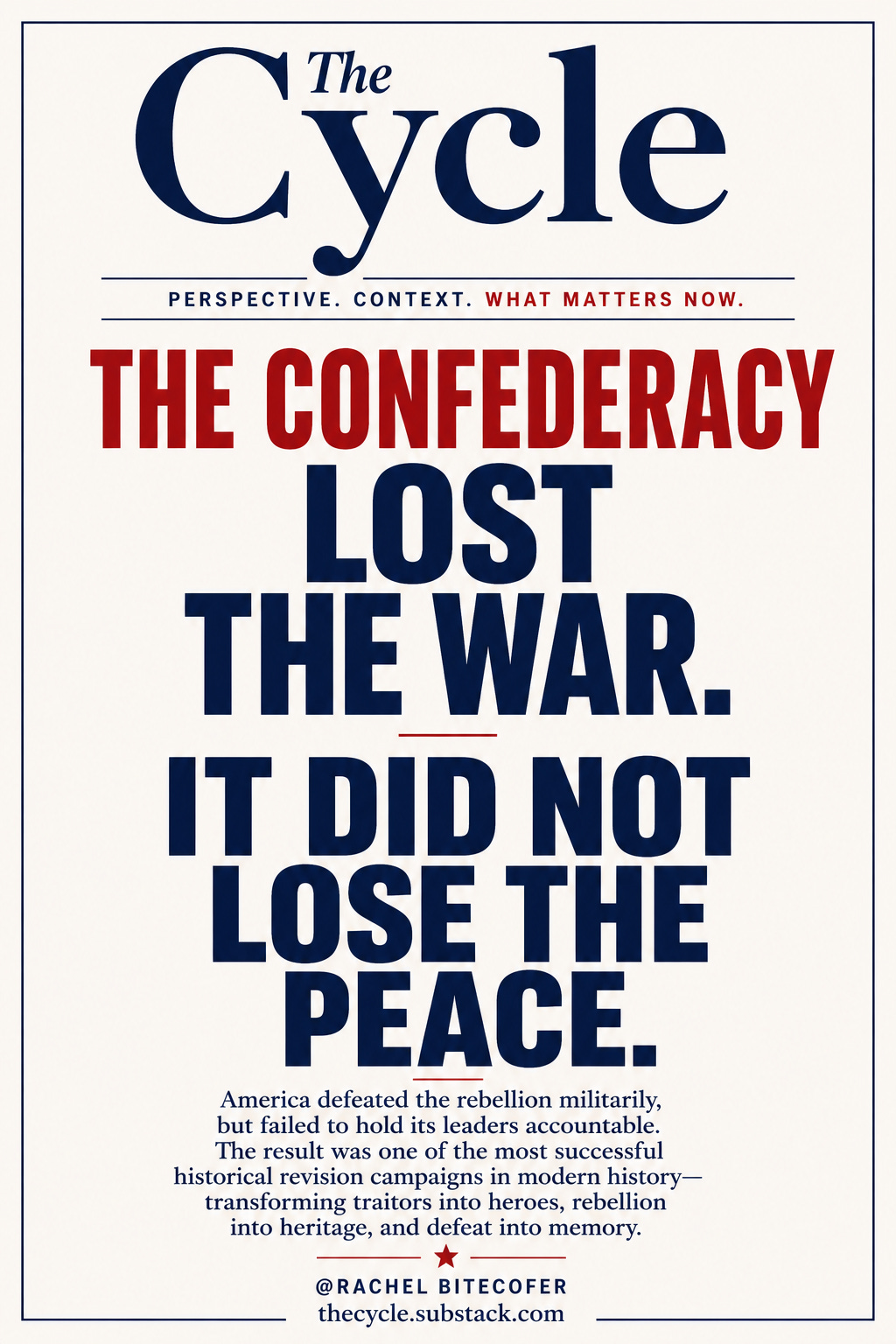
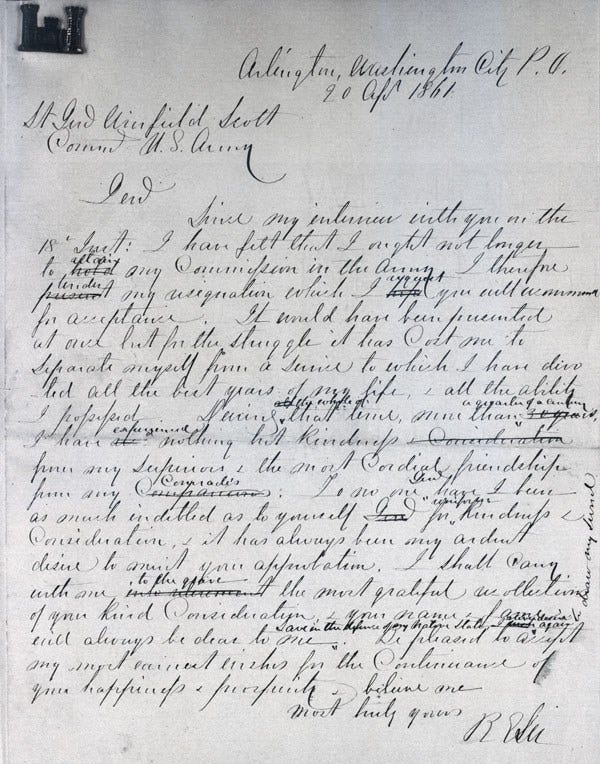
On April 20, 1861, Robert E. Lee resigned from the United States Army.
“Save in defense of my native State, I never desire again to draw my sword,” he would later write in explaining his decision.
It was not a rash choice. Lee had spent more than three decades serving the nation. He graduated from West Point without a single demerit, distinguished himself in the Mexican-American War, and was widely regarded as one of the finest officers in the Army. He had also sworn an oath—not to Virginia, not to Arlington, and not to the South, but to the Constitution of the United States.
When Virginia seceded, Lee faced a choice. He loved the Union and opposed secession. He understood that war meant breaking the bonds forged in the blood of their own grandfathers in the American Revolution. Yet, when forced to choose between the nation he served and the state he now considered “his country”, Lee chose Virginia.
Lee was hardly alone. During the American Civil War, 304 West Point graduates rejected their oath of allegiance to the United States and chose to serve in armed rebellion for the Confederate States Army.
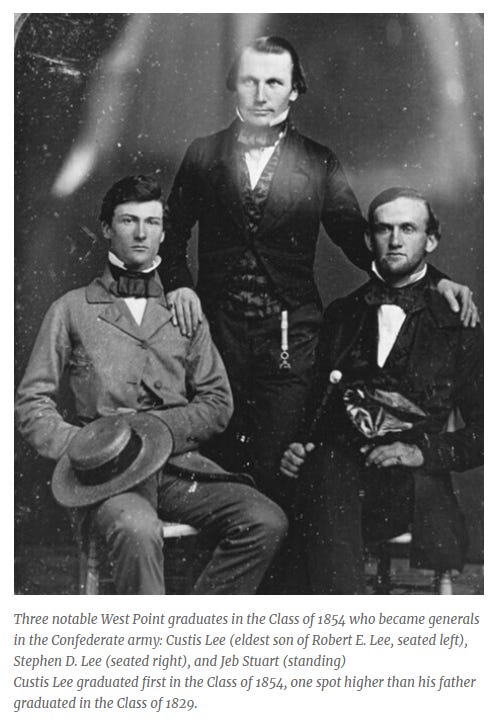
.Jefferson Davis had served as Secretary of War. James Longstreet, Joseph Johnston, P.G.T. Beauregard, and countless other Confederate leaders were products of the American system. They attended American schools, held American commissions, accepted American paychecks, and swore American oaths. Then they violated them.
For four years, the nation paid an extraordinary price for that betrayal. Roughly three-quarters of a million Americans died. Entire communities were shattered. The South was devastated. Slavery—the institution that had caused the crisis—was destroyed and the Confederacy collapsed.
The question facing the country in 1865 was no longer about whether the Confederacy had been defeated, it was whether the men who had led it would be held accountable. At first, the answer seemed obvious. Jefferson Davis was arrested and imprisoned. Former Confederates were barred from office. Federal troops occupied the South. Congress drafted the Fourteenth Amendment, including Section 3, which prohibited many former Confederates from returning to positions of public trust. Across the South, Black Americans voted, held office, and participated in public life on a scale that would have been unimaginable only a few years earlier.
For a brief moment, accountability seemed possible. Then came Jefferson Davis. If Robert E. Lee was the Confederacy’s most celebrated general, Davis was its political architect. He had sworn an oath to the Constitution, served in the Senate, served as Secretary of War, and then became president of a government that launched an armed rebellion against the United States.
When Union forces captured Davis in May 1865, Americans assumed they knew what would happen next. He was imprisoned at Fort Monroe, indicted for treason, and held as the most prominent prisoner of the rebellion. Newspapers debated his fate. Some demanded execution. Others expected a lengthy public trial.
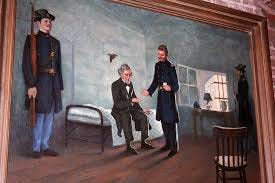
Nearly everyone assumed the government intended to make an example of him. Instead, the government blinked.
Months became years. Politicians worried about reopening old wounds. Some feared a jury might acquit him. Others simply wanted the country to move on. The legal questions became more complicated. The political appetite for accountability became weaker. Eventually, the government gave up and Jefferson Davis never stood trial for treason.
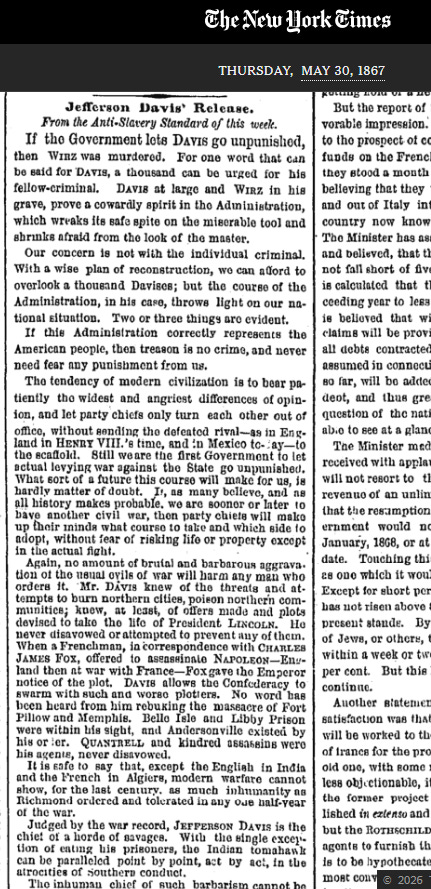
Pause a second and think about how extraordinary that is. The leader of an armed rebellion that cost hundreds of thousands of American lives never had to defend his actions before a jury. Instead of execution for treason he was released from prison and spent the remainder of his life defending the cause for which he had fought.
Reconstruction was imperfect, but it worked. Imagine being born into slavery in Mississippi and living long enough to watch a Black man represent your state in the United States Senate? Blanche K. Bruce was elected to the Senate in 1874. Hiram Revels had arrived before him. Across the South, Black men voted, served on juries, held local office, sat in state legislatures, and participated in public life in ways that would have seemed impossible before Appomattox.
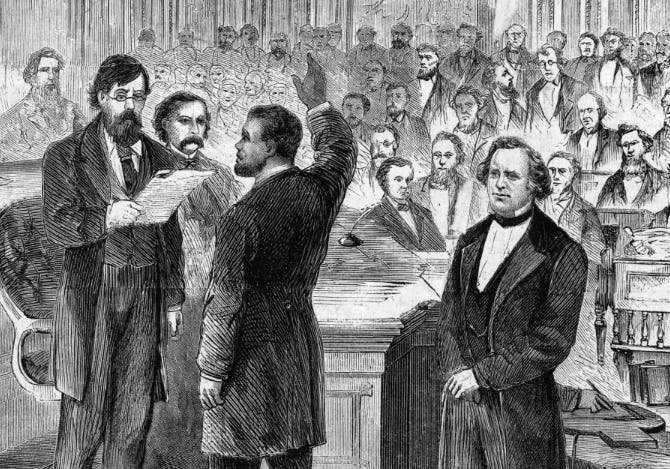
Schools and new infrastructure were built. State constitutions were rewritten. The Freedmen’s Bureau helped formerly enslaved families reunite and build new lives. For the first time in American history, the former Confederacy began to resemble something approaching a multiracial democracy.
Federal troops occupied the South. Congress passed the Reconstruction Acts. The Fourteenth and Fifteenth Amendments ended slavery and banned former confederates from public office. When white supremacist violence emerged to stop Black political participation Congress passed the Enforcement Acts and the Ku Klux Klan Act. Federal investigators entered the South. Troops were deployed. Grand juries were convened. Hundreds of Klansmen were arrested.
The system worked, the federal government demonstrated that it could defend democracy and the rights of Black southerners if it chose to do so which is what makes what happened next all the more tragic.
One of the least remembered chapters of Reconstruction is that the former leaders of the Confederacy were not immediately welcomed back into American political life. The 14th Amendment contained a powerful safeguard designed to protect the republic from the very people who had attempted to destroy it. Section 3 barred individuals who had previously sworn an oath to support the Constitution and then participated in insurrection or rebellion from voting or holding federal or state office. This provision was not aimed at ordinary Confederate soldiers. It was aimed at the political, military, and governmental leadership that had led the secession movement and waged war against the United States.
For a brief period, the provision worked as intended. Many of the South’s former political elites found themselves excluded from power while Reconstruction governments attempted to build new democratic institutions. But the commitment to enforcing that restriction proved short-lived. As Northern political will weakened in the 1870s, pressure grew to restore the old Southern leadership class to full participation in government. In 1872, Congress passed the Amnesty Act, removing the disability from most former Confederates. Additional restrictions were lifted over time, culminating in broad restoration of political rights to former Confederate leaders. Men who had helped break apart the United States were once again eligible to serve in public office, shape public memory, and influence future generations.
The consequences were profound. The very people whom the 14th Amendment had sought to keep from power were eventually given the opportunity to reclaim it. Former Confederates and their political heirs returned to statehouses, governorships, Congress, and positions of cultural influence across the South. They helped construct the intellectual foundations of the Lost Cause, recasting secession as a noble defense of liberty rather than a rebellion launched to preserve slavery. Had Section 3 remained fully enforced for a generation, the political leadership of the South might have developed along a very different path. Instead, the barriers fell, the old elite reemerged, and many of the men who had lost the war ultimately won the battle over how it would be remembered.
Then the presidential election of 1876 ended with a dreaded tie in the Electoral College, requiring the U.S. House to appoint the winner. Democrat Samuel Tilden had won the popular vote. Southerners threatened violence once again.
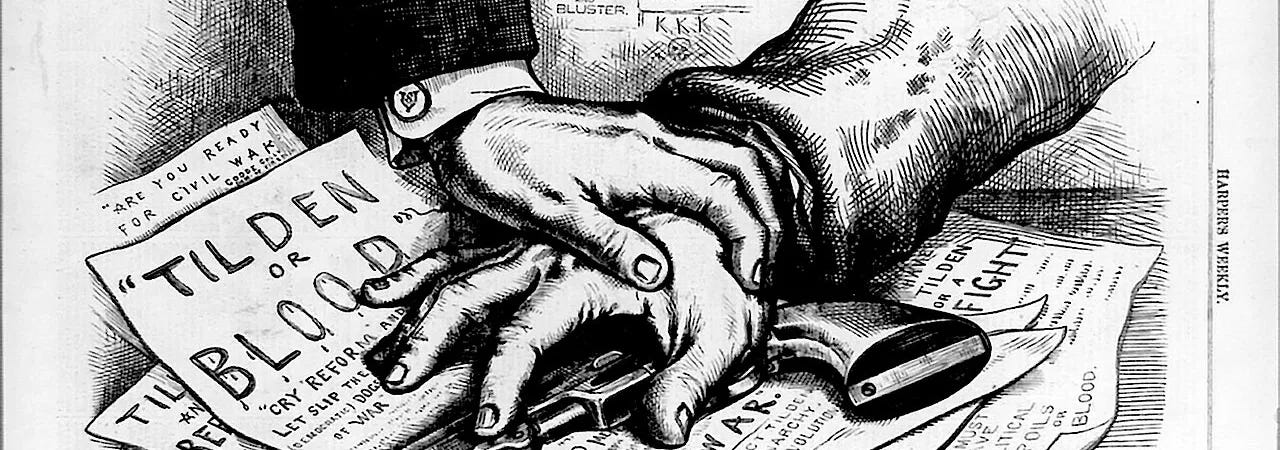
The solution became known as the Compromise of 1877. Republicans got the White House and the South got an end to Reconstruction. Federal troops were withdrawn and with it, the federal commitment that had sustained Black citizenship across much of the South disappeared almost overnight.
Frederick Douglass watched Americans grow increasingly eager to reconcile with the former Confederates. Robert Smalls watched white supremacist violence return to Southern politics. Blanche Bruce repeatedly warned that constitutional rights meant little if the federal government refused to enforce them.
Douglass saw the danger before most Americans did. “There was a right side and a wrong side in the late war,” he reminded audiences. “It is no part of our duty to confound right with wrong, or loyalty with treason.”
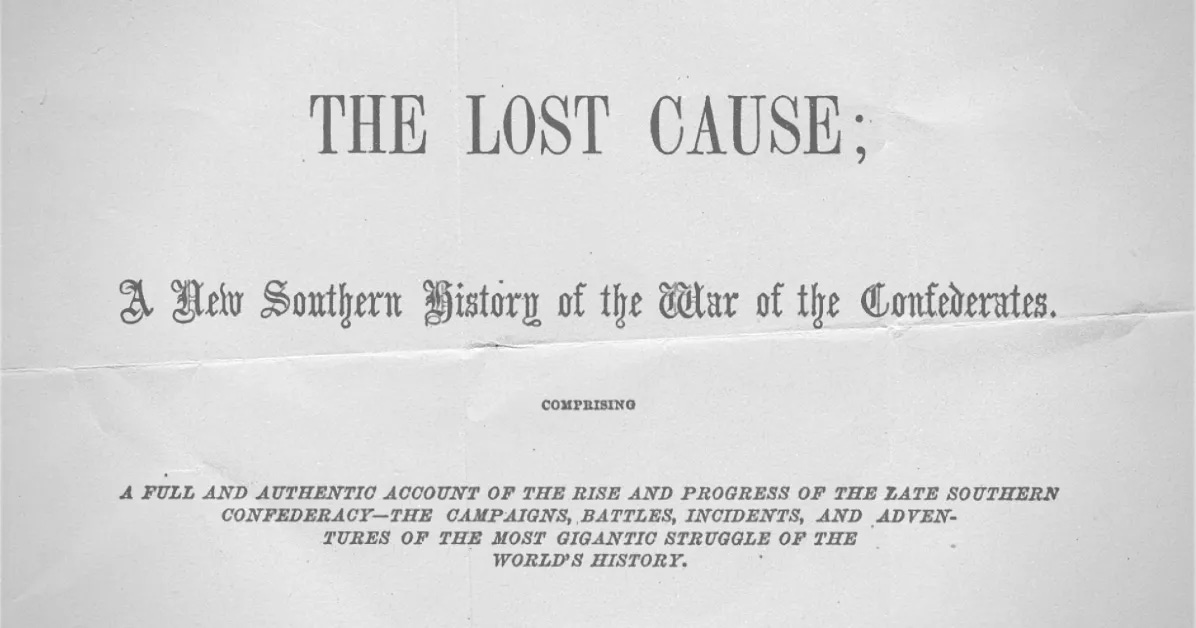
But that is exactly what happened. Once Reconstruction ended, the battle shifted from politics to memory. The South began one of the most successful historical revision campaigns in modern history. The rebellion became the Lost Cause, secession became a defense of states’ rights, and slavery faded into the background.
The men who had violated their sacred oaths became heroes. Traitors became patriots. Monuments rose across courthouse lawns and town squares. Confederate memorial associations raised money. Textbooks changed. Children learned a new version of the Civil War, one that transformed the Confederacy from a rebellion launched to preserve slavery into a noble struggle for local self-government.
This Confederate monument on Stone Mountain resides over heavily Black Atlanta as a shrine to a Confederate cause designed to keep them in chains.
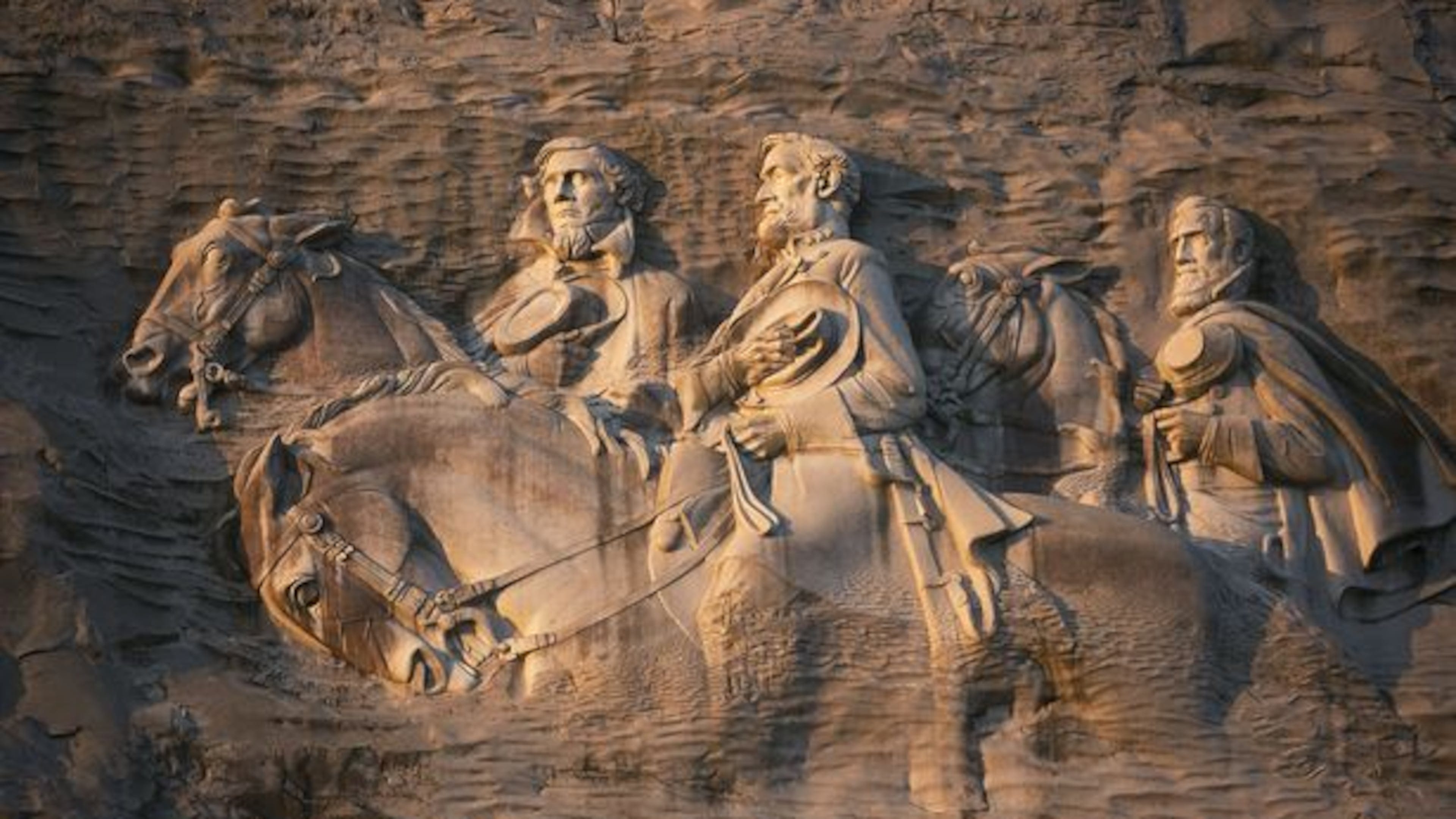
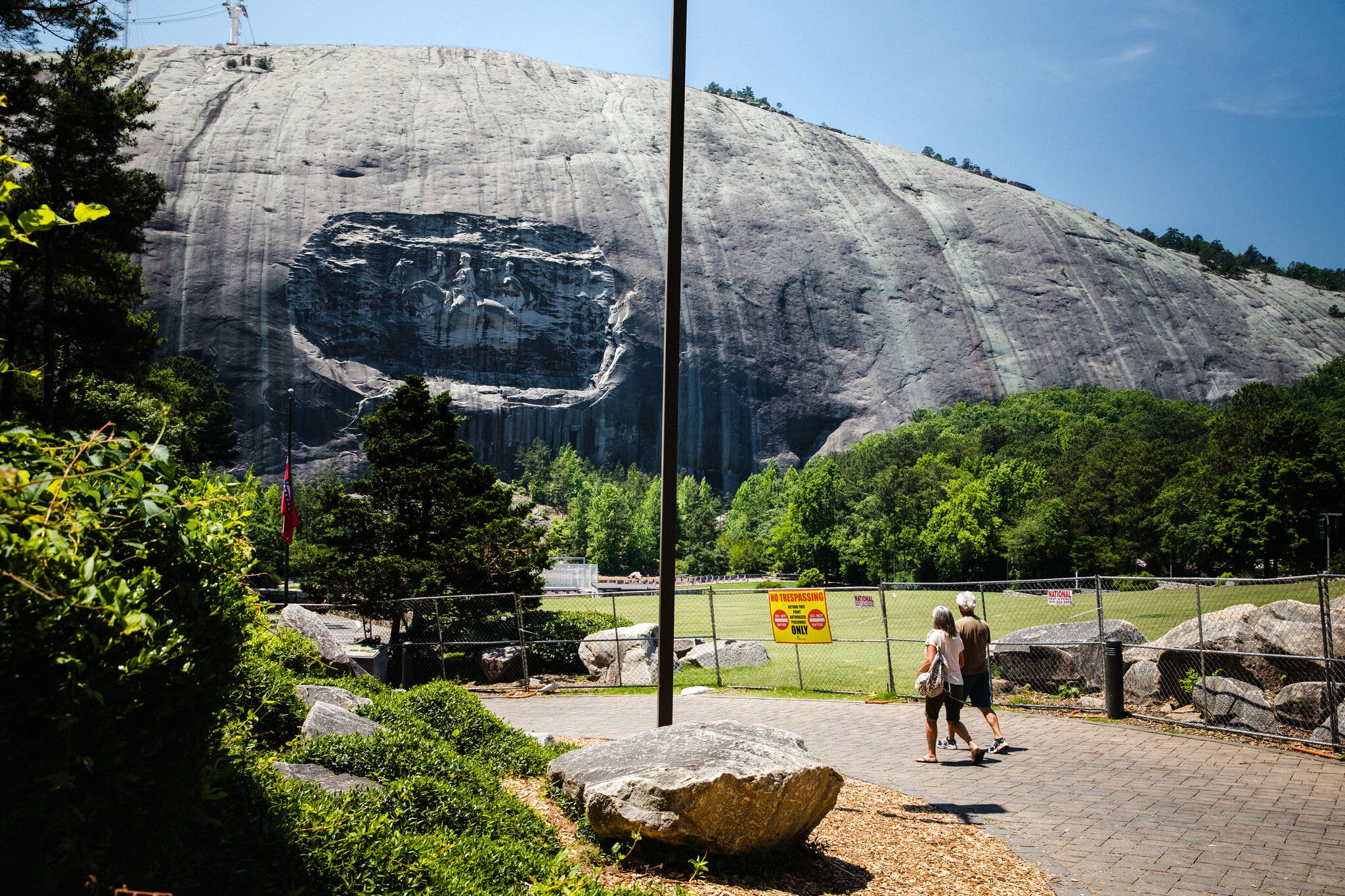
Schools with predominately Black student bodies were named after Robert E. Lee. Federal military bases were named after Confederate generals who made war against the Constitution they had vowed to serve and protect.
Millions of Southern children grew up learning a version of history that would have been unrecognizable to the people not in the South. When I left to do my PhD in the Deep South my brother joked I would be learning all about the War of Northern Aggression.
I thought he was joking- he was not!
I once delivered that line to an auditorium of southerners and no one laughed.
My Introduction to American government course was the first time many of my southern-raised students learned the reality of the Civil War: the Confederates were the baddies who tried to murder the American Experiment in its cradle to protect the right to enslave other people.
The Confederacy lost the war, but it won was the peace and the reason it won the peace was because there was no accountability for the leaders of secession. Lacking that accountability, their biographies were malleable enough to seed and disperse the Lost Cause narrative.
The Lost Cause advances several narratives allowing the aggressors of the Civil War to redefine themselves as the victims of federal overreach including the “Happy Slave” Narrative which falsely depicts slavery as a benign or beneficial system, promoting the trope of content, loyal enslaved individuals who were treated well by their enslavers. Under the lost Cause, Confederate traitors like Robert E. Lee and Stonewall Jackson are presented as chivalrous Christian gentlemen fighting honorably for their homeland’s freedom against overwhelming odds.
Confederate narrative victory was not achieved on a battlefield, it was achieved because accountability collapsed. Americans defeated the rebellion militarily but failed to defeat it politically, culturally, and historically. Exhaustion created space for reconciliation. Reconciliation created space for mythmaking. Mythmaking transformed traitors into heroes, rebellion into heritage, and defeat into memory. More than a century later, the consequences remain with us.
Millions of Americans still defend Confederate symbols. Millions still view the Confederacy through the lens of the Lost Cause. The political geography of the old Confederacy remains visible on electoral maps. The arguments have changed. The parties have changed. The generations have changed, but the myth has not.
The greatest mistake Americans made after the Civil War was not failing to win the war, it was believing that accountability for traitors was too politically divisive.
They left the South to rise again. However this ends, we must not do the same.
Indeed. Andrew Johnson played a large role in undermining accountability. Capitalists and the people of the North were tired of the war, and cared little for the formerly enslaved, they resented the costs of Reconstruction. Political will evaporated. I fear the same thing will happen when our Trump nightmare comes to an end. There will be an initial push to hold Trump's enablers to account, but trials will grind for years and the public will lose interest, and the political class will seek a compromise in the interests of "healing" and "looking forward." I'm sure Trump's allies are aware of this likelihood. Powerful people are allergic to accountability.
Excellent analysis! I grew up in Western North Carolina in the era of Segregation. By the time I started public school, integration had begun, at least in name.
In third grade, I was taught NC history in a textbook approved by the Daughters of the Confederacy. We learned about the “Wilmington Race Riot,” where a group of armed blacks threatened the city and were rightfully put down.
What we didn’t know and that virtually no one alive today knew, is that the story was a lie. The fact was that Josephus Daniels, former Secretary of the Navy and owner of the Raleigh News & Observer, together with the newspaper’s co-owner, Julian Carr, engineered a coup d’etat of the duly elected Fusion (white Populist and black Republican) City Counsel of Wilmington, forcing them to resign at gun point.
Wilmington was the largest city in the state in 1898. Its population was majority black. The gang of white racists burned the newspaper and other black businesses, killed hundreds of black citizens, and drove out thousands of others.
They did the same thing in Goldsboro and Kinston. The militia of racist whites kept blacks from the polls all over the state, thereby installing as Governor, Charles B. Aycock and a majority white racist legislature that together installed Jim Crow throughout the state.
No one in North Carolina knew this real story until an intrepid staff reporter from the Charlotte Observer, Eric Frasier, wrote a three-part exposé on the Wilmington coup in 1998, the literal hundredth anniversary of the coup.
When I read it, my head exploded! The perpetrators of the outrage were able to subvert the narrative and whitewash history. They got away with it for 100 years!
There’s much more to say about this, but I’m grateful to Eric Frasier that he had the determination and the courage to bring that sorry chapter of North Carolina’s history into the light.